
The Importance of Pest Control in the Florida Food Industry
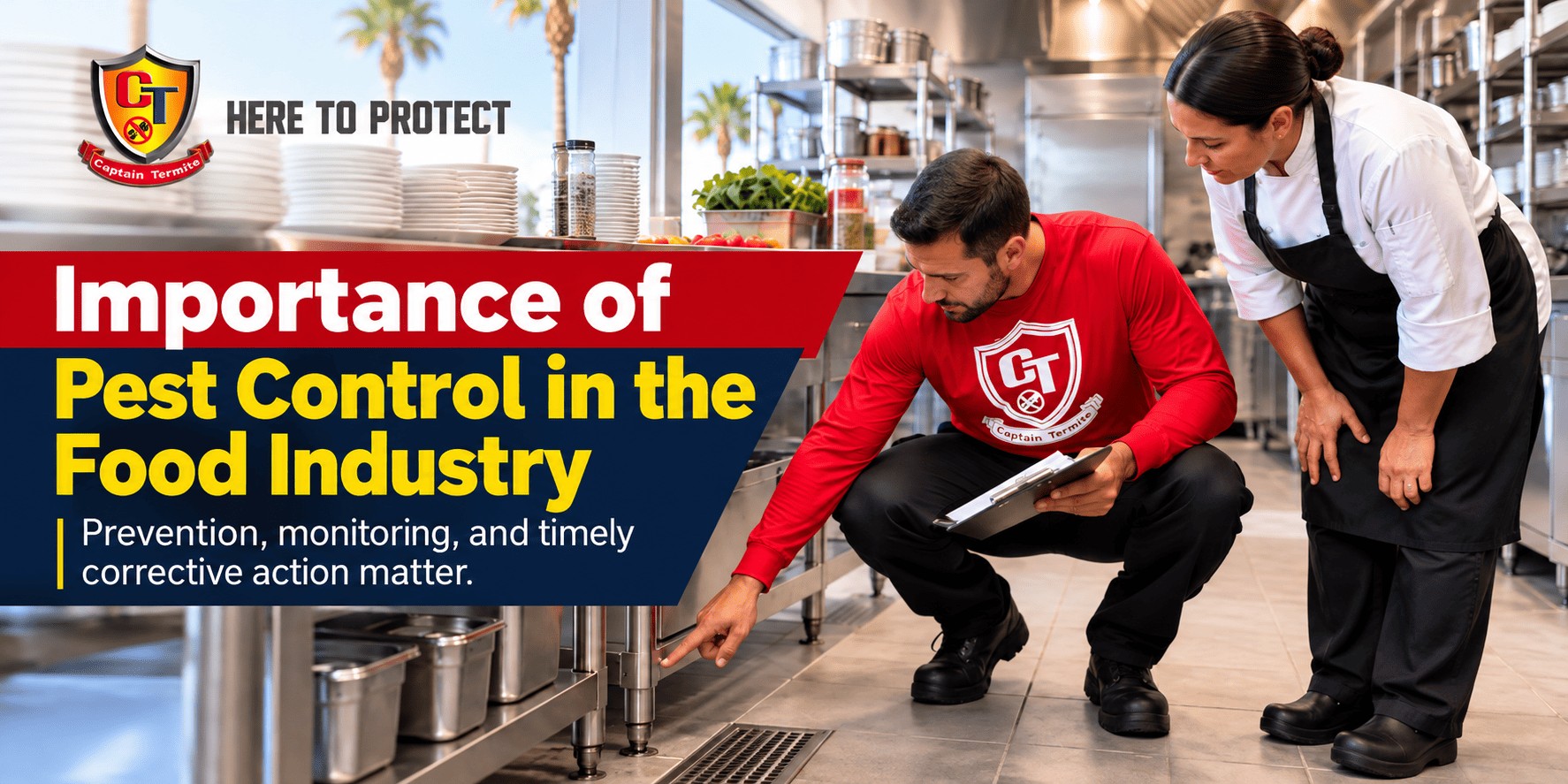
A professional pest control service can help restaurants and other food-service businesses identify, monitor, and manage rodents, cockroaches, ants, flies, and other pests that may contaminate food, damage property, or create sanitation concerns. Effective pest management should combine inspection, exclusion, sanitation, monitoring, and appropriate treatment rather than waiting until pests are already visible to customers or inspectors.
Food-service businesses face a different pest-control challenge than most residential properties. Kitchens, storage rooms, dumpsters, delivery areas, drains, food residue, moisture, and frequent door openings can provide pests with the food, water, shelter, and access they need to become established.
At Captain Termite, we provide commercial pest control services for food-service and other business properties in the Hollywood area. The objective is not simply to treat the pest that has already been seen. A more effective approach begins by determining what pest is present, where it is entering or nesting, what conditions are supporting the activity, and which corrective measures make sense for the property.
Why Does a Pest Control Service Matter for Food Businesses?
Pests are more than an appearance problem in a restaurant, café, commercial kitchen, or other food-service operation.
Rodents, insects, and other pests can come into contact with food, packaging, preparation areas, equipment, storage spaces, and waste areas. Pest activity may also indicate structural openings, sanitation problems, moisture conditions, or other issues that need attention.
For Florida public food-service establishments, pest control is also part of the regulatory environment. Florida rules require effective measures to protect establishments against the entrance, breeding, and presence of rodents, flies, roaches, and other vermin.
This means pest management should be treated as an ongoing operational issue rather than something addressed only after a customer sees a cockroach or rodent.
Which Pests Create the Biggest Concerns for Food-Service Properties?
The pests found at a food business depend on the building, surrounding environment, food being stored or prepared, waste-management practices, moisture, and available entry points.
| Pest | Why It Matters in Food Service | Common Signs |
|---|---|---|
| Rodents | Can contaminate food or surfaces with urine, droppings, saliva, and other material | Droppings, gnaw marks, scratching sounds, damaged packaging |
| Cockroaches | Can move through unsanitary areas and food-preparation or storage spaces | Live insects, droppings, egg cases, activity around drains or equipment |
| Ants | May forage around food, water, cracks, walls, and preparation areas | Trails, recurring activity near food or moisture, entry through small openings |
| Flies | May be attracted to food residue, organic waste, drains, or garbage areas | Repeated adult activity around kitchens, waste areas, drains, or doors |
Correct identification matters. Treating every insect or rodent problem in exactly the same way can waste time and may fail to address the source of the infestation.
Why Are Rodents a Serious Problem Around Food?
Rodents are particularly concerning because they can move through storage areas, wall voids, utility openings, dumpsters, kitchens, and other locations while searching for food and shelter.
Signs can appear before an employee actually sees a rat or mouse.
Warning signs may include:
- Droppings
- Gnaw marks on packaging or building materials
- Scratching sounds
- Nesting material
- Grease or rub marks along travel routes
- Damaged food containers
- Activity near dumpsters or exterior walls
A rodent problem should not be approached only by placing a trap where an animal was last seen. Rodents often follow established travel routes, and the visible activity may be some distance from the actual entry point or nesting area.
Our rodent control services in Hollywood begin with an inspection so the property and likely activity patterns can be evaluated before determining an appropriate control strategy.
Why Are Cockroaches Difficult to Manage in Commercial Kitchens?
Commercial food environments can provide cockroaches with exactly what they need: moisture, food residue, warmth, cracks, drains, cardboard, equipment voids, and undisturbed hiding areas.
Seeing one cockroach does not tell you where the infestation is concentrated. Activity may occur behind appliances, beneath sinks, inside cabinets, around plumbing penetrations, near floor drains, or in other protected spaces.
That is why effective cockroach control usually involves more than treating visible insects.
The property should also be evaluated for:
- Moisture and plumbing leaks
- Food residue beneath equipment
- Cracks and gaps
- Storage practices
- Cardboard accumulation
- Drain and waste conditions
- Adjacent areas that may support pest activity
A commercial pest-control plan can then target the areas contributing to the problem rather than relying solely on repeated surface treatments.
How Do Ants Become a Food-Service Problem?
Ants can enter through very small openings while searching for moisture and food. Kitchens, beverage stations, storage areas, wall penetrations, sinks, and exterior landscaping can all become part of their travel pattern.
Simply spraying the ants that are visible may not address the colony or the conditions drawing them inside.
Effective ant control services in Hollywood should start with identifying where activity is occurring and, when possible, which type of ant is involved. Treatment strategies can then be selected based on the infestation rather than assuming every ant problem requires the same approach.
What Does Integrated Pest Management Mean for a Food Business?
Integrated Pest Management, commonly called IPM, is an approach that combines inspection, identification, monitoring, prevention, and appropriate control methods rather than depending only on pesticide application.
For a food-service property, that approach can include:
- Inspect the property. Look for pest evidence, entry points, nesting areas, food sources, water sources, and structural conditions that may support activity.
- Identify the pest. Different pests require different control strategies.
- Remove attractants where possible. Food residue, standing water, leaking pipes, unmanaged waste, and clutter can contribute to pest activity.
- Improve exclusion. Gaps around doors, utility penetrations, damaged screens, and structural openings may provide access.
- Monitor activity. Continued observation helps determine whether the problem is improving and whether new activity has appeared.
- Use targeted treatment when necessary. Treatment should be selected for the pest, location, and conditions rather than applied indiscriminately.
- Reassess. A recurring problem may indicate that an entry point, food source, harborage area, or neighboring condition still needs attention.
This approach is particularly useful in food environments because pest control and sanitation are closely connected.
What Can Food-Service Employees Do to Reduce Pest Pressure?
A pest-control company cannot compensate indefinitely for conditions that continuously provide pests with food, water, and access.
Daily operational practices matter.
Food-service teams should pay attention to spills, crumbs, grease buildup, standing water, leaking fixtures, open food containers, cardboard accumulation, overflowing waste, damaged door sweeps, and frequently opened exterior doors.
Exterior conditions are important as well. Dumpsters, vegetation touching the structure, damaged openings, standing water, and storage against exterior walls can contribute to pest pressure around a building.
The objective is to make the property less attractive and less accessible while a pest-control professional addresses existing activity.
What Does Florida Require From Public Food-Service Establishments?
Florida’s requirements are particularly relevant to restaurants and other public food-service establishments regulated by the Department of Business and Professional Regulation.
Florida Administrative Code requires effective measures to protect against rodents, flies, roaches, and other vermin. Buildings must also be maintained to limit rodent access, and pesticide use within regulated establishments must comply with applicable food-code requirements.
Florida’s Division of Hotels and Restaurants conducts inspections of public food-service establishments for compliance with state sanitation and safety requirements.
A pest-control provider can help identify and address pest-related conditions, but hiring an exterminator does not automatically make a business compliant. Management still has responsibility for sanitation, food handling, facility maintenance, employee practices, and the other requirements that apply to the establishment.
Should a Food Business Wait Until It Sees Pests?
No. Visible pest activity is often a late indicator.
A rodent may travel after closing hours. Cockroaches may remain behind equipment or inside cracks during the day. Ants may enter through wall penetrations that are not immediately obvious. Flies may be breeding in a source that is not located directly where adults are being seen.
Regular inspections can help identify conditions that deserve attention before activity becomes more widespread.
The appropriate inspection or treatment frequency depends on factors such as:
- Type of food operation
- Building condition
- History of pest activity
- Nearby businesses
- Waste volume
- Exterior environment
- Current infestation level
There is no single treatment schedule that is appropriate for every restaurant or food business.
Are Termites Part of Food-Safety Pest Control?
Termites are generally a different concern from rodents, cockroaches, ants, and flies because their primary threat is structural property damage rather than food contamination.
A restaurant or commercial building can still have a termite problem, particularly in South Florida, but the termite issue should be evaluated separately from routine sanitation-focused pest management.
If signs of termites are present, our termite control services in Hollywood, FL include inspection and treatment options based on the type and extent of the infestation.
What Should a Food Business Expect From a Commercial Pest Control Service?
A useful pest-control visit should do more than spray a visible insect and leave.
The process should begin by understanding:
- What pest is causing the problem
- Where activity has been observed
- Where pests may be entering
- Where food, water, or shelter may be available
- Whether structural or sanitation conditions are contributing
- What treatment and prevention steps are appropriate
At Captain Termite, we provide commercial pest control services in Hollywood, including pest management for food-service properties. We evaluate the property before recommending a solution so the plan reflects the actual pest and site conditions.
Frequently Asked Questions About Pest Control for Food Businesses
Why is pest control important in a restaurant?
Pest control is important because rodents, cockroaches, flies, ants, and other pests can create food-contamination, sanitation, property, and customer-confidence concerns. Florida public food-service establishments must also take effective measures to control vermin. Pest management should therefore be part of routine facility management rather than only an emergency response.
Which pests are most common concerns in food-service buildings?
Rodents, cockroaches, flies, and ants are common concerns because food, water, waste, warmth, and shelter can attract them. The exact pest pressure varies by property, surrounding environment, building condition, sanitation practices, season, and nearby activity.
Can a clean restaurant still develop a pest problem?
Yes. Good sanitation reduces pest attractants, but pests can also enter through gaps, drains, utility openings, deliveries, adjoining properties, damaged doors, or exterior areas. A clean facility can therefore still require exclusion, monitoring, inspection, and targeted pest treatment.
Does professional pest control guarantee health-code compliance?
No. Professional pest control can help address pest-related conditions, but compliance involves many other responsibilities, including food handling, sanitation, storage, equipment, building maintenance, employee practices, and regulatory requirements. The food-business operator remains responsible for meeting applicable rules.
How often should a restaurant receive pest control?
There is no universal schedule for every food business. The appropriate frequency depends on pest history, building conditions, surrounding pest pressure, food and waste volume, inspection findings, and the type of establishment. Higher-risk or recurring conditions may justify more frequent monitoring.
What should I do if I see rodent droppings in a food-storage area?
Treat the finding as evidence of possible rodent activity and investigate promptly. Food or packaging that may have been contaminated should be handled according to applicable food-safety procedures, and the area should be evaluated for entry points, nesting, food sources, and additional signs of activity.
Are ants in a restaurant always just a cleaning problem?
No. Food residue can attract ants, but repeated activity may also involve moisture, structural openings, exterior colonies, landscaping, plumbing areas, or established travel routes. Cleaning is important, but persistent infestations may require identification, exclusion, and targeted ant control.
Can Captain Termite provide pest control for commercial food-service properties?
Yes. We provide commercial pest control services for food-service businesses as part of our broader pest-management services. The appropriate treatment depends on the property, pest involved, activity level, and conditions identified during inspection.
Need a Pest Control Service for Your Hollywood Food Business?
Pest problems in food-service properties should be addressed at the source rather than managed only when an insect or rodent becomes visible. Inspection, sanitation, exclusion, monitoring, and targeted treatment all play a role in reducing conditions that support recurring activity.
If you operate a restaurant or other food-service property in the Hollywood area, Captain Termite can evaluate the pest issue and recommend appropriate next steps.
Contact Captain Termite to request an inspection or discuss commercial pest-control service for your property. Prefer to speak with us directly? Call us at 954-391-1726.
